
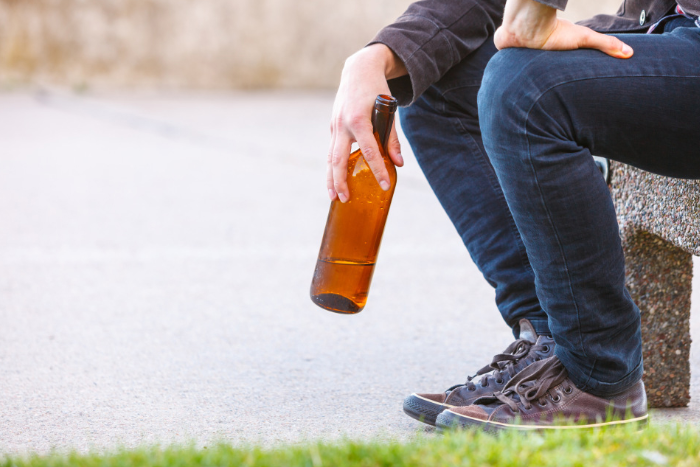
The myths over tackling problems with drinking in public
As summer arrives so do the problems associated with people drinking alcohol in the street.
City of Lincoln Council has tackled the problems by having active Public Spaces Protection Orders (PSPOs) aimed at reducing anti-social behaviour in key areas - the Broadgate, Central, and Lucy Tower Street multi-storey car parks, as well as specific city centre locations to restrict intoxicating substance misuse, loitering, and public urination.
The council works with Lincolnshire Police to enforce the orders, but there is often confusion about what they can and cannot do by law,
Neighbourhood Policing Sergeant Callum Corder has looked at the myths about how public drinking issues can be tackled and explains how PSPOs work.
Myth 1 - People drinking in public should just be arrested.
The Facts - Drinking alcohol in public is not automatically illegal in England. Restrictions only apply in areas covered by PSPOs.
Myth 2 - PSPOs ban drinking outright.
The Facts - PSPOs do not create a blanket ban on drinking. They give police and council officers the power to intervene when alcohol is being consumed within a designated PSPO area and target behaviour, not alcohol.
You can legally drink alcohol in public unless you’re in an area covered by a PSPO and an officer asks you to stop or hand over your drink.
"It’s the refusal to comply with that request that becomes the offence - not the act of drinking itself.
If someone does refuse to stop drinking or hand over alcohol when asked they will be issued with a fixed penalty fine of up to £100.
What can often happen is people will stop drinking but start again when an officer has left the scene. Offenders will receive an advice letter to ensure the person is aware of what they did, or was doing, was not acceptable, setting out expectations and further sanctions for not desisting in that behaviour.
Failure to comply with the process and desist in the behaviour will ultimately result in a civil injunction. The council will prepare evidence for a court application which will list requirements in line with the community’s expectation of behaviour. Failure to comply can result in a custodial sentence.
Sergeant Callum Corder added: "Our aim isn’t to penalise responsible adults - it’s to manage behaviour that affects the safety or comfort of others.
"In cases where persistent street drinkers are responsible for ongoing antisocial behaviour, we work closely with council colleagues to address the issue. Repeat offenders are taken to court, where we seek Criminal Behaviour Orders to prevent them from returning to the area. Any breaches of these orders are followed up promptly and dealt with through the courts. Sanctions increase for those who breach court orders, which we have seen on numerous occasions."