
Is ancient Arctic key to mammals' evolution?
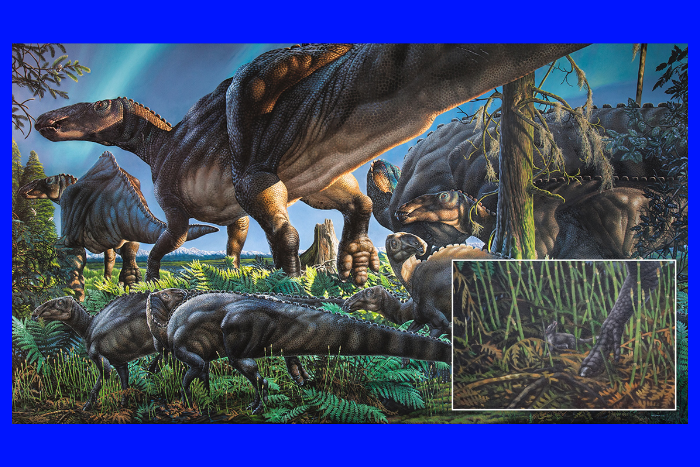
Tiny mammals living in the Arctic more than 70 million years ago may help explain how some species survived the extinction event that wiped out the dinosaurs.
A new study published in the Proceedings of the National Academy of Sciences (PNAS), identified three previously unknown species of extinct mammals from fossil teeth discovered in northern Alaska.
The research group included Dr Sarah Shelley, a palaeontologist and postdoctoral researcher in the School of Natural Sciences at the University of Lincoln, and it looked at house and rat–sized animals, which belonged to a group of mammals known as multituberculates. These survived for more than 100 million years and outlived the non-avian dinosaurs following the asteroid impact that caused their extinction.
The findings suggest the Arctic played a far more important role in mammal evolution than previously thought. The study also indicates the animals’ ancestors travelled from what is now Mongolia to North America around 92 million years ago using an ancient land bridge between the continents.
Dr Shelley explained: “While the polar regions don’t host the same level of biodiversity as the tropics, they were still very active places for life to flourish, extending far back into deep time.”
The three species were named Camurodon borealis, Qayaqgruk peregrinus and Kaniqsiqcosmodon polaris. Researchers identified the animals using fossilised teeth recovered from the Prince Creek Formation within the Arctic Circle, dating back around 73 million years.
Despite months of winter darkness, freezing temperatures and seasonal food shortages, the tiny mammals appear to have adapted well to life in the ancient Arctic.
By studying the shape of the fossil teeth, the research team found evidence that the species likely had different diets. Some appeared to feed mainly on plants, while others were probably omnivores that also ate insects.
Dr Shelley said this flexibility may have helped the animals survive environmental pressures and coexist in a region where food was limited.
“There’s a lot of diversity in the multituberculate group. They lived for an incredibly long time, and I think they can reveal a lot about the resilience of mammals, not just to the mass extinction, but also to climatic stresses that many organisms are facing today,” she said.
The study adds to growing evidence that animals moved between Asia and North America much earlier than previously understood.
Dr Shelley added: “It really challenges how we think about native species. Deep time reminds us that a place is not just a point on a map, but a long, layered history of landscapes and inhabitants.”
The research was completed during Dr Shelley’s previous role at the University of Colorado Boulder, in collaboration with colleagues at the University of Alaska and Florida State University.
Picture: James Havens