Food for thought Chelsea Flower Show
Visitors to the RHS Chelsea Flower Show can discover how robotics, artificial intelligence and plant science are shaping the future of horticulture.
The University of Lincoln will be exhibiting at the show from May 19-23 and will demonstrate how the technologies are being applied to address real-world challenges facing the food manufacturing sector.
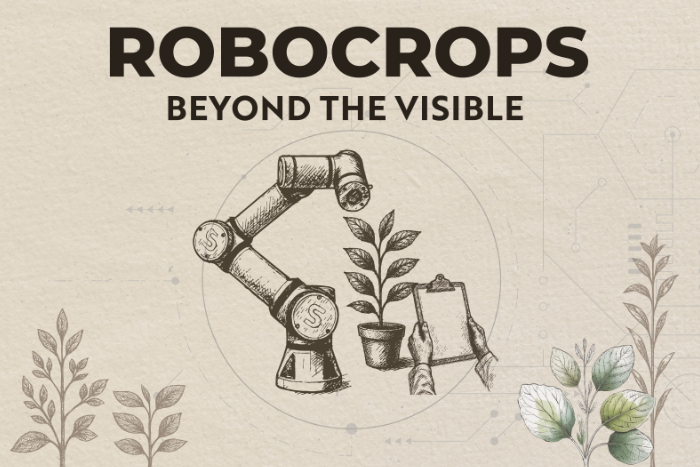
The university’s Lincoln Institute for Agri-Food Technology (LIAT) will present RoboCrops: Plant Selection, Beyond the Visible featuring a GreenSTEM zone with PhenAIx, an advanced robotic phenotyping system that uses imaging and AI to analyse plant characteristics that are invisible to the human eye.
By capturing detailed insights into plant health, growth and performance, the system has the potential to significantly accelerate plant breeding and support the development of more resilient, sustainable crops.
Chelsea visitors will be able to see the technology in action, as plants are scanned and analysed in real time - demonstrating how human expertise and intelligent systems can work together to improve how we grow and select plants.
The exhibit also highlights the exciting and diverse STEM career opportunities underpinning this work, from robotics engineering and AI to plant science and data analysis, which will play a vital role in driving a successful, sustainable and resilient horticulture sector in the future.
Professor Simon Pearson MBE, Founding Director of LIAT, said: “Chelsea Flower Show offers a unique platform to illustrate how robotics and AI can support the future of horticulture, a research priority for LIAT. Being part of the GreenSTEM zone allows us to showcase how science and technology are already being applied to address real-world challenges facing growers and the wider agri-food sector.”
Associate Professor and LIAT Director of Teaching and Learning, Dr James Wagstaffe, added: “Horticulture offers exciting and rewarding career paths, and our exhibit shows how a growing mix of STEM skills is opening the door for more people to shape our sustainable food systems and creating healthier environments.”