
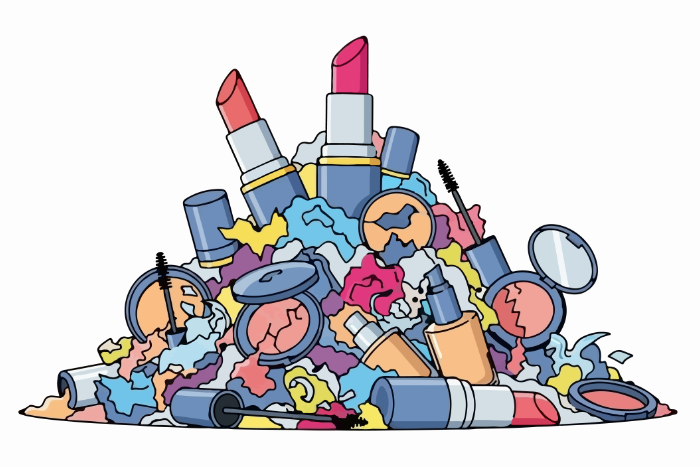
The recycling contaminants in your make-up bag
Everyday beauty items in your bathroom could contaminate recycling efforts according to waste removal experts.
The UK’s beauty and personal care industry is one of the largest in Europe, valued at over £10 billion a year.
That’s a market that creates a lot of waste.
From nail varnish to flushable wipes, Miroslav Radov, founder of Rainbow Rubbish Removals reveals the products you should never throw away without checking their impact.
Disposing of common beauty products incorrectly risks contaminated recycling, environmental damage and potential fines under stricter waste rules.
As councils continue to crack down on recycling contamination, experts say one of the biggest problem areas isn’t the kitchen, but the bathroom, where complex packaging, leftover liquids and non-recyclable materials are often thrown away without a second thought.
“People are far more careful with food packaging, but beauty products are a different story. A lot of them contain mixed materials, chemicals or leftover product, which means they can’t be processed the way people think,” said Miroslav.
“If the wrong items go into recycling, they can contaminate entire loads. That means everything gets rejected and sent to landfill instead.”
“With councils tightening rules, repeated contamination can lead to warnings and, in some cases, fines. It’s not just about recycling more, it’s about recycling correctly.”
Items include nail varnish and remover; make up wipes and cleansing pads; half used skin care and foundation; pump, droppers and sprays; make-up palettes and compacts; aerosols; toothpaste tubes and toothbrushes.
A study at the University of Plymouth into microplastics that could be harmful to marine life discovered that there were 80 different facial scrubs on the UK market containing around 100,000 microbeads that are released with each single use.
Beauty consumption continues to rise with more households using multi-step skincare routines, at-home treatments and subscription-based product deliveries.
This has led to a surge in packaging waste, much of which is difficult to recycle due to:
- Mixed materials that cannot be separated
- Residual product left inside containers
- Small components like pumps and caps being rejected by systems
According to waste experts, even well-intentioned recycling can backfire if items are disposed of incorrectly and recycling the wrong way is worse than not recycling at all.
“One of the biggest misconceptions is that everything plastic can go in recycling. That’s not true, especially with beauty products,” added Miroslav.
“Something as simple as a half-full bottle of foundation or a pump dispenser can cause issues further down the line in processing.”
“The best thing people can do is empty products fully, separate what they can, and check local guidance. Small changes at home can prevent much bigger problems in the system.”